
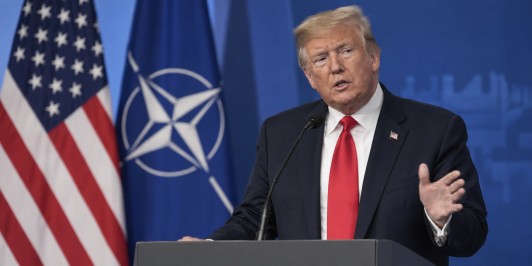
The decision by NATO allies to bolster defence spending significantly reshapes the alliance’s strategic landscape, aiming to enhance military capabilities by 2035. This move sees a substantial increase in financial commitments from member states, with the target set at 5% of GDP for defence and security expenditures.
Announced during the 2025 NATO Summit in The Hague, the initiative will see member countries allocating 3.5% of their GDP to core defence activities, while an additional 1.5% will support defence-related investments and broader security needs. This plan marks a considerable rise from the previous 2% benchmark, and U.S. President Donald Trump has welcomed it as a “significant step” for NATO.
In his address at the United Nations General Assembly in New York, Trump emphasized the importance of this commitment, expressing optimism about the alliance’s future readiness. He also reiterated the United States’ commitment to diplomatic efforts aimed at resolving the ongoing Russia-Ukraine conflict, which he noted continues to result in severe human casualties.
NATO’s report highlights that European allies and Canada have already begun to increase their defence budgets, with a nearly 20% rise in core defence spending in real terms observed in 2025 compared to the previous year. This collaborative effort reflects a shared recognition of the evolving security challenges facing the international community.
The 5% GDP spending goal is part of a broader strategy to strengthen NATO’s collective security, ensuring the alliance remains robust against emerging threats. By 2035, these efforts aim to boost defence production and military readiness, reinforcing the alliance’s role in maintaining global stability.