
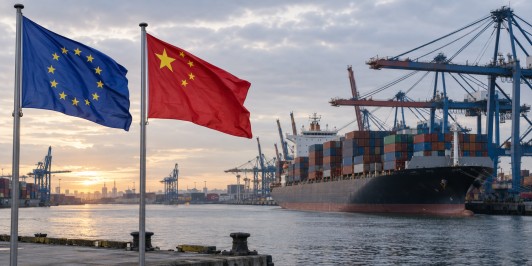
The European Union is under mounting pressure to address its growing trade deficit with China, a situation that has significant implications for the bloc’s economic stability. In July 2026, the EU’s trade deficit with China surged to €36.5 billion, driven by a substantial imbalance in goods exchange, according to Eurostat data. This growing gap is prompting EU officials to consider measures aimed at curbing imports, particularly in sectors like hybrid vehicles and chemicals.
Statistics reveal that EU imports from China increased by 8% year-on-year to €53.9 billion in July, while exports to the Asian giant dipped by 1.6% to €17.4 billion. The monthly trade deficit has widened from €32.3 billion recorded in the same period a year prior, underscoring the ongoing disparity in trade relations. Over the first seven months of 2026, the cumulative trade deficit reached approximately €234 billion.
One of the focal points in this trade imbalance is the surge in imports of hybrid vehicles from China. This trend follows the EU’s imposition of additional tariffs on Chinese electric vehicles back in 2024, which did not extend to hybrid models, resulting in differential tariff treatment. In response, EU officials have pursued voluntary limitations on Chinese exports of hybrid vehicles to manage trade tensions.
As the EU grapples with the economic ramifications of this trade deficit, upcoming discussions with China are expected to prioritize strategies for boosting European exports and reducing reliance on Chinese goods, particularly in strategic sectors. The widening trade gap with China highlights the urgent need for the EU to rebalance its economic relations, ensuring greater equity and sustainability moving forward.