
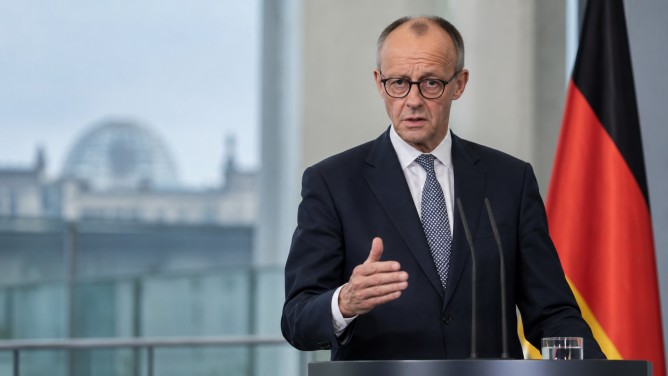
The recent regional elections in Germany have underscored shifting political dynamics, as Chancellor Friedrich Merz’s Christian Democratic Union (CDU) faced significant setbacks, potentially affecting the party’s future strategies. The Alternative for Germany (AfD) capitalized on the CDU’s decline, marking substantial gains that may intensify political polarization in the country.
In Berlin, the left-wing Die Linke emerged victorious with 25.7% of the vote, outpacing the CDU, which garnered 18.8%. The AfD, securing 16.3% of the vote, solidified its position as a growing force. This result reflects the increasing fragmentation of the political landscape in Germany’s capital, where traditional party lines are being redrawn.
In Mecklenburg-Western Pomerania, the AfD achieved a landmark victory, capturing 38.2% of the vote and surpassing the Social Democrats, who received 35.5%. The CDU’s performance was particularly disappointing, capturing just 4.9% and failing to meet the 5% threshold necessary for representation in the state parliament. This outcome highlights the AfD’s growing influence, especially in eastern regions of Germany.
These election results have put additional pressure on Chancellor Merz, who is already contending with the CDU’s challenges following the party’s underwhelming performance in Saxony-Anhalt earlier this month. Despite these setbacks, Merz has vowed to stay in office and continue advocating for his government’s economic and social reform agenda. However, this electoral outcome is likely to spark internal debates within the CDU regarding its leadership and strategic direction.
The AfD’s electoral gains and Die Linke’s success in Berlin indicate a pronounced shift in voter sentiment that could have lasting implications for German politics. As regional divisions become more pronounced, the CDU and other traditional parties may need to reassess their approaches to address the evolving political landscape effectively.