
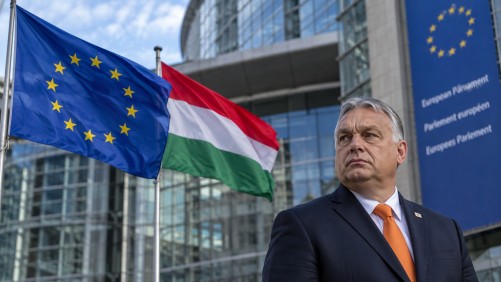
Members of the European Parliament from Hungary’s Fidesz-KDNP party have issued a call for the immediate and unconditional release of European Union funds that have been withheld from their country. The Hungarian MEPs highlighted that approximately €6.3 billion, linked to three specific operational programmes, was frozen in 2022. This sum accounts for about 55% of the funds allocated under those programmes. In addition to this, the MEPs are pressing for the release of funds from the EU’s post-pandemic Recovery and Resilience Facility, as well as Hungary’s broader cohesion funding.
In 2020, Hungary negotiated around €22 billion in additional cohesion funding, which the MEPs claim has been partially withheld by European institutions for what they describe as political reasons. The Fidesz-KDNP representatives in the European Parliament are also advocating for an increase in the EU budget for 2027, proposing a rise of €11 billion. This proposal includes an additional €2.5 billion allocated to the Common Agricultural Policy, aimed at providing more support for young farmers, the wine industry, and beekeeping.
Furthermore, Hungarian members associated with the Patriots for Europe group have put forward a proposal to double the EU agricultural crisis fund from €450 million to €900 million. This suggestion comes in response to recent crop losses due to drought and the increasing costs faced by livestock farmers. They emphasize the need for additional financial assistance to mitigate these challenges.
In terms of border security, the Hungarian MEPs are also calling for increased funding. They are seeking the reimbursement of Hungary’s border-control expenses and advocating for a review of the EU migration pact. Additionally, they are pushing for the restoration of Erasmus funding for Hungarian university students who have been affected by restrictions on their participation in the programme.
The Fidesz-KDNP delegation has also made a controversial proposal to reduce EU funding for civil society organisations by €250 million. They argue that such funding has been used to exert politically motivated pressure on member states, which they believe should be curtailed.