
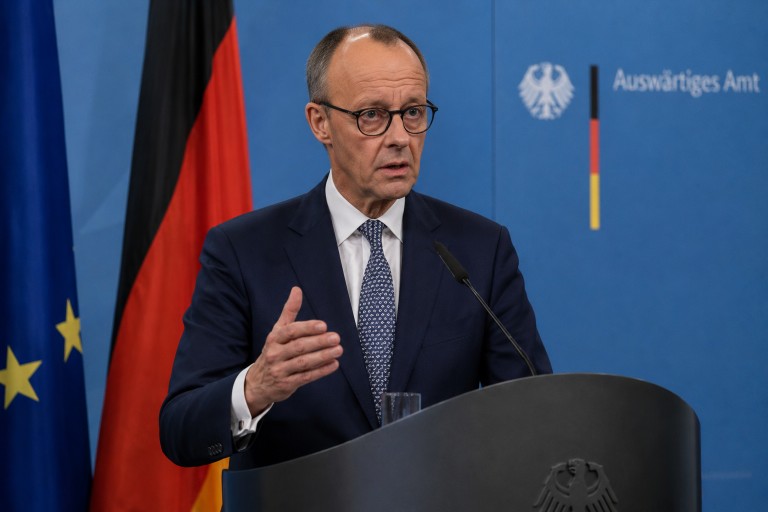
Amid rising concerns over foreign influence, German Chancellor Friedrich Merz has issued a stern warning to the United States regarding interference in Germany’s upcoming state elections. This response comes after the US State Department unveiled a grants initiative that allocates up to $3 million to support projects across Europe focusing on national sovereignty, migration, censorship, and the rule of law. Merz underscored the importance of mutual respect for electoral processes, noting that Germany refrains from meddling in US elections and expects reciprocal conduct from its transatlantic partner.
The US initiative has sparked debate, with critics arguing that the funding could inadvertently bolster right-wing political movements within Europe. Nonetheless, the US State Department maintains that the grants are designed to promote democracy, human rights, and sovereignty, clearly stating that political parties are ineligible to receive this financial support. This assurance aims to allay fears of political bias and emphasizes the program’s commitment to strengthening democratic values.
Chancellor Merz has highlighted the legal framework in Germany that prohibits foreign funding for political parties, a measure intended to safeguard the integrity of the country’s political system. His comments reflect a broader concern about maintaining a level playing field in electoral processes and ensuring that elections are free from external influence. This stance emphasizes the importance Germany places on transparency and fairness in its democratic institutions.
Beyond the immediate concerns over the grants program, this issue contributes to ongoing tensions between the United States and several European governments. The debate underscores a growing unease about political influence and the safeguarding of democratic practices on both sides of the Atlantic. As these discussions unfold, the focus remains on upholding the principles of sovereignty and the rule of law, cornerstones of democratic governance.
The dialogue between Germany and the United States highlights the complexities of international relations in a globalized world where political dynamics often extend beyond national borders. As leaders navigate these challenges, the emphasis remains on cooperation and respect for each nation’s electoral processes, ensuring that democratic ideals are preserved and strengthened amid changing geopolitical landscapes.