
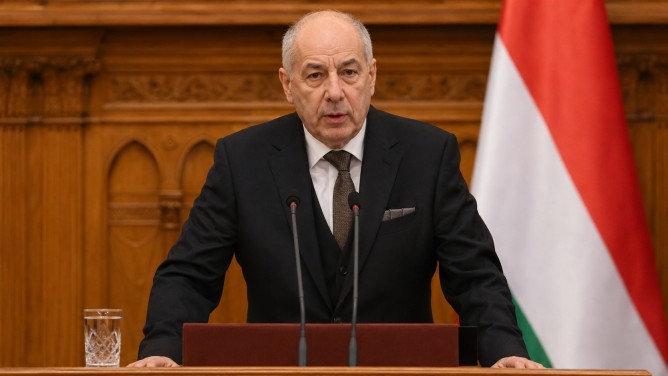
Hungary is embroiled in a significant constitutional conflict following the parliamentary approval of an amendment poised to cut short President Tamás Sulyok’s term. The proposed change, strongly supported by the legislative majority, mandates that the sitting president must sign off on the legislation for it to come into force. However, this requirement places President Sulyok in a precarious position, as signing the amendment would effectively terminate his own mandate ahead of schedule.
During an event commemorating the “Day of the Courts,” President Sulyok took the opportunity to underscore the importance of upholding the rule of law and maintaining judicial independence. His remarks were interpreted as a subtle critique of the unfolding constitutional crisis, highlighting that legal principles should transcend political agendas. In a related statement, the president’s office called for adherence to constitutional norms and cautioned against the misuse of parliamentary authority.
Constitutional experts point out that President Sulyok’s options are limited under Hungary’s legal framework. He retains the possibility of challenging the amendment on procedural grounds by referring it to the Constitutional Court. However, should the court deem the amendment free of legal flaws, the president would then be obligated to sign it into law.
If President Sulyok chooses not to endorse the amendment, the situation could escalate, with lawmakers potentially initiating impeachment proceedings or declaring him temporarily incapacitated. Such a move would permit the speaker of the parliament to assume presidential duties temporarily and proceed with signing the legislation.
This amendment has not only stirred domestic political tensions but has also raised broader concerns regarding the rule of law in Hungary. Legal analysts warn that constitutional amendments should uphold the principles of legal certainty and safeguard the independence of public institutions, further highlighting the significance of this ongoing dispute.