
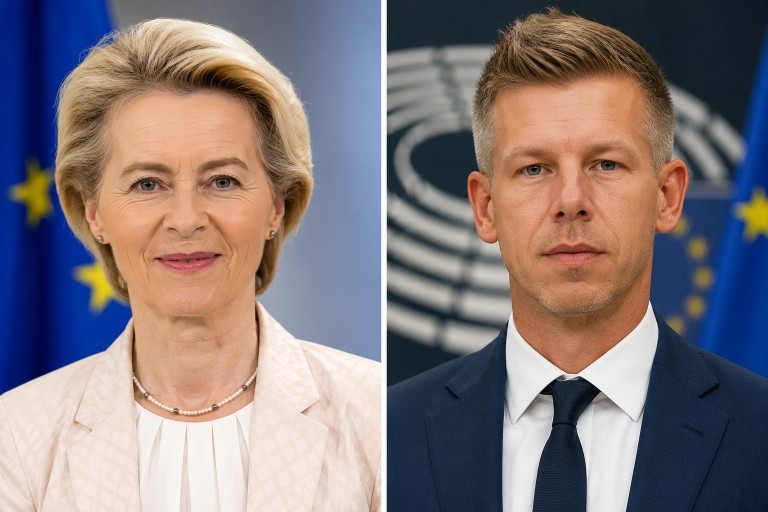
The European Commission and Hungary have reached a pivotal agreement, unlocking EU funds that had been previously frozen. This development follows Hungary’s commitment to implementing a series of reforms aimed at addressing transparency, governance, and the management of EU funds. European Commission President Ursula von der Leyen acknowledged the Hungarian government’s initial steps in tackling these concerns through measures such as enhancing anti-corruption safeguards, improving oversight mechanisms, and joining the European Public Prosecutor’s Office.
Under the terms of the deal, Hungary stands to receive €16.2 billion in EU funding, which Hungarian Prime Minister Péter Magyar hailed as a significant boost to the nation’s economic development and investment strategies. The funds are earmarked for infrastructure, energy security, housing, transportation, and business development projects. Furthermore, additional financial support may be forthcoming if Hungary continues to advance reforms, particularly those related to higher education and academic governance.
This agreement also marks a turning point for Hungarian academia, as it facilitates the re-entry of Hungarian students into the Erasmus exchange program starting from the next academic year. The development is seen as a positive step in rekindling educational and cultural exchanges that had been disrupted.
Despite the progress in financial and educational collaboration, migration policy remains a topic of ongoing discussion between Hungary and the EU. Prime Minister Magyar emphasized Hungary’s commitment to border protection and strict controls on illegal migration, asserting that the country will meet its European obligations while safeguarding the EU’s external borders. He clearly stated that Hungary has no plans to establish migrant camps within its territory.
This funding agreement signifies a marked improvement in relations between Hungary and the European Commission after years of disputes over governance, judicial reforms, and EU budget allocations. As Hungary moves forward with its reform agenda, the agreement reflects a renewed willingness on both sides to collaborate on shared challenges.