
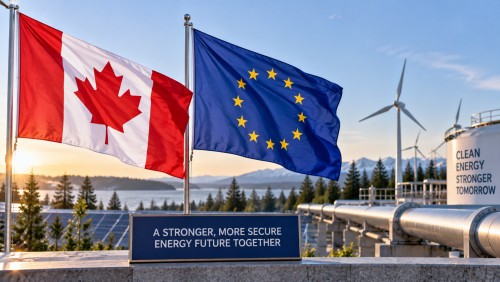
Europe’s energy security could see a significant boost as Canada and the European Union explore a partnership aimed at reducing Europe’s dependency on Russian energy supplies. This potential collaboration could have practical implications for European nations seeking stable and diversified energy sources, leveraging Canada’s vast oil and natural gas resources.
During a recent visit to Strasbourg, Canadian Prime Minister Mark Carney engaged in discussions with EU leaders about enhancing economic and strategic ties between Canada and Europe. The talks focused on how Canada, with its substantial energy reserves and export capabilities, could play a pivotal role in supporting Europe’s energy needs.
Despite Canada’s robust export infrastructure on its West Coast, the country currently lacks the necessary facilities on its eastern coast to directly supply energy to Europe. Developing such infrastructure could take several years, prompting both parties to consider alternative solutions, such as energy swap agreements. Through these arrangements, Canadian energy shipments originally designated for Asian markets could be exchanged with those headed to Europe, allowing European countries to access Canadian energy without requiring transatlantic shipments.
The scope of this partnership may extend beyond traditional fossil fuels. Canada is also positioned to provide critical minerals essential for Europe’s transition to clean energy, supporting the development of renewable power and other low-carbon technologies. By combining energy trade with the supply of critical minerals, Canada and the EU aim to forge a comprehensive strategy to strengthen their economic and energy ties.
This proposed cooperation underscores the strategic importance of diversifying energy sources and building resilient energy infrastructures. As Canada and the EU explore these opportunities, the potential partnership could serve as a model for international energy collaboration, balancing immediate energy needs with long-term sustainability goals.