
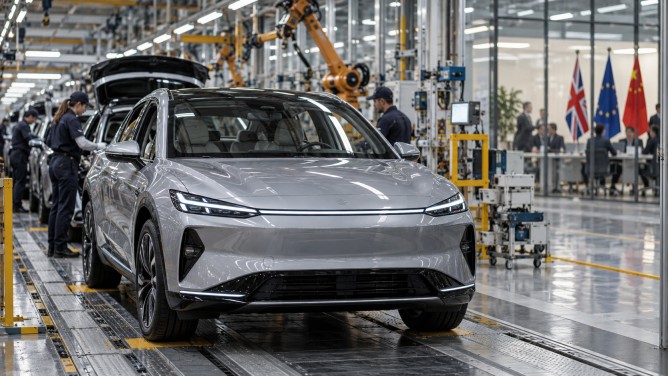
The United Kingdom is exploring the introduction of tariffs on Chinese-manufactured electric vehicles as part of its efforts to align with the European Union’s Made in Europe industrial initiative. This consideration could potentially enhance Britain’s manufacturing connections with the EU, but it also risks escalating trade tensions with China.
The EU’s proposed Industrial Accelerator Act seeks to bolster European manufacturers by promoting locally produced goods and countering the competition from subsidized imports. The initiative, backed by France and Germany, may require the UK to conform to EU trade defense measures, which include imposing tariffs on Chinese electric vehicles starting in 2024.
While British officials have indicated that negotiations are in the preliminary stages, they emphasize maintaining the UK’s independent trade policy. However, China has expressed opposition to the potential tariffs, cautioning that such measures could undermine free trade and negatively impact economic relations between the two nations.
The decision to impose tariffs could have significant ramifications for the British automotive sector, which is heavily dependent on exports and European supply chains. Participation in the EU initiative could aid British manufacturers in staying competitive, although tariffs might lead to increased vehicle prices and provoke retaliatory actions from China.
The EU plans to advance the Industrial Accelerator Act by late 2026 or early 2027. Discussions regarding the UK’s participation and possible trade obligations are still ongoing, leaving the future of UK-EU-China trade relations uncertain.