
Hungary has solidified its position as a pivotal hub for the automotive industry in Europe, largely due to substantial investments from leading global car manufacturers. Major automakers such as BMW, Mercedes-Benz, and Volkswagen have significantly expanded their operations within the country. BMW has committed nearly €2 billion to its plant in Debrecen, which boasts an annual production capacity of 150,000 vehicles. Meanwhile, Mercedes-Benz is enhancing its facility in Kecskemét, and Volkswagen continues its extensive engine and vehicle production in Győr.
In addition to traditional automotive manufacturing, Hungary has also attracted considerable investment in electric mobility and battery production. Chinese automaker BYD is in the process of developing a passenger-car plant in Szeged. Concurrently, battery giants CATL and EVE Energy are setting up facilities near Debrecen. South Korean firms such as SK Group and Samsung are already operating battery plants in the country. These developments have been facilitated by Hungary’s competitive corporate tax rate of 9% and relatively low labor costs, which were approximately €15.20 per hour in 2025, in stark contrast to Germany’s €45 per hour.
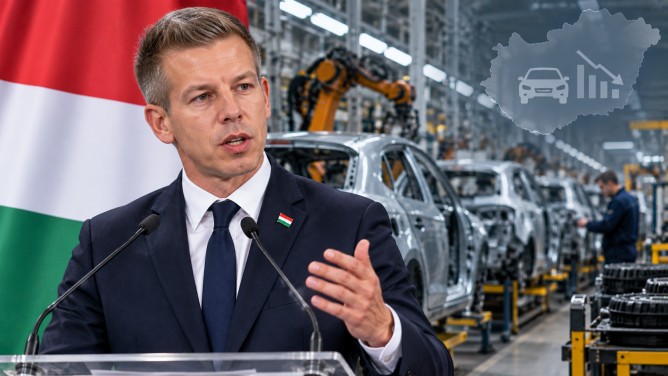
Forecasts indicate that Hungary could see its vehicle production reach around 541,000 units annually by 2028. However, the automotive sector is on the brink of potential transformation as Prime Minister Péter Magyar’s government considers implementing stricter environmental regulations, diminishing corporate incentives, and increasing wages. These policy shifts could pose challenges for the industry, particularly in the areas of battery and electric vehicle production.
The government has already initiated regulatory actions against CATL concerning wastewater management, and Semcorp has faced suspensions due to environmental and fire-safety infractions. Magyar has proposed imposing higher charges on polluting businesses and curtailing tax benefits for multinational corporations. Furthermore, his commitment to elevating the minimum wage to 1 million forints by 2030 could lead to increased production costs, prompting industry leaders to express concerns about the potential impact on competitiveness.
These policy changes could also have repercussions beyond Hungary, affecting Austria, which exported €925 million worth of automotive components to Hungarian factories in 2024. Austrian suppliers play a vital role in providing electric motors, steel components, and other essential parts to Hungary’s automotive sector. Despite these challenges, industry representatives emphasize Hungary’s continued importance in manufacturing, technology transfer, autonomous vehicle development, and research partnerships. They caution, however, that the future trajectory of the sector will largely hinge on the policies enacted by Magyar’s administration.