
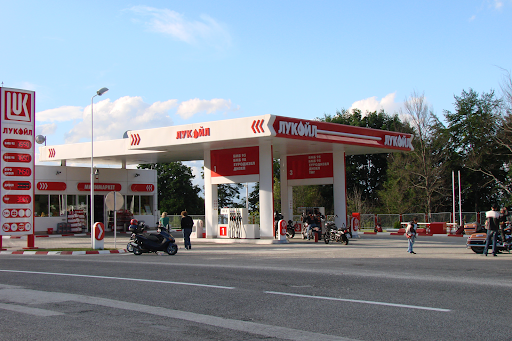
Moscow’s primary source of revenue is in varying degrees of peril after a significant military operation where Ukraine strikes Russian oil assets located in the Caspian Sea. The platforms identified as V. Filanovsky, Yuri Korchagin, and Valery Grayfe sustained direct hits, according to an official statement from the General Staff of the Armed Forces of Ukraine. These platforms are the property of Lukoil, one of Russia’s largest and most important energy corporations. The attack is interpreted as a direct attempt to degrade the financial capabilities of the Russian state, attacking the very commodities that allow the Kremlin to finance its extensive military campaigns. This operation signifies a broadening of the theater of war, moving beyond the traditional front lines to encompass critical economic zones that are vital for Russia’s fiscal stability.
The platforms in question have been the subject of repeated targeting attempts throughout December, indicating that they are high-priority objectives for Ukrainian military planners. The report of direct hits suggests that the latest strike was successful in breaching the facility’s defenses, though the full extent of the structural and operational damage is still under assessment. Lukoil’s lack of immediate comment creates a vacuum of information, leading to speculation about the potential for long-term production halts. This fits into a broader Ukrainian strategy of targeting “shadow fleet” tankers, refineries, and sea terminals, all with the singular goal of reducing the flow of petrodollars into the Russian treasury.
Beyond the maritime economic warfare, Ukrainian forces have achieved tangible military successes on the ground in the Luhansk region. A Russian Buk-M3 air defense system, a highly capable medium-range launcher, was successfully targeted and destroyed. The destruction of this system, confirmed by reports of multiple secondary explosions, represents a tactical victory that peels back a layer of Russia’s air defense coverage. This allows Ukrainian drones and aircraft greater freedom of maneuver in the contested airspace, potentially facilitating further strikes against Russian troop concentrations and logistical hubs.
Logistics remains a critical front in the war, evidenced by a separate strike on a material and technical support warehouse in the Kherson region. By targeting the warehouses that store the nuts and bolts of the Russian war effort, Ukraine is engaging in a classic strategy of interdiction. The destruction of these supplies hinders the ability of Russian units to maintain their equipment and sustain prolonged combat operations. This slow strangulation of supply lines is designed to reduce the combat power of the adversary over time, making them less effective in both offensive and defensive roles.
The conflict’s reach into the Russian heartland was further demonstrated by a deadly drone attack on the city of Voronezh. According to Governor Alexander Gusev, air defense forces neutralized 17 Ukrainian drones in what he described as one of the most significant aerial assaults on the city to date. Despite the interceptions, the raid resulted in the death of one person and injuries to four others. This incident highlights the growing vulnerability of Russian cities to long-range attacks, disrupting daily life and forcing the Russian military to deploy scarce air defense assets to protect rear areas far from the active front.
Moscow’s Revenue in Peril as Ukraine Strikes Russian Oil Assets Including V. Filanovsky Platform
Picture Credit: www.commons.wikimedia.org
60