
A landmark Supreme Court decision Friday fundamentally altered the balance of power between federal courts and the executive branch by limiting judges’ authority to issue universal injunctions against presidential policies. The 6-3 ruling came in response to challenges against Trump’s birthright citizenship directive.
The court’s conservative majority, led by Justice Amy Coney Barrett, determined that federal judges had overstepped their bounds by issuing nationwide orders that completely blocked enforcement of Trump’s executive action. These injunctions, issued by courts in Maryland, Massachusetts, and Washington, had prevented the administration from implementing its citizenship policy anywhere in the country.
Barrett’s majority opinion stressed that judicial authority to enforce legal compliance has boundaries, and sometimes the law itself constrains judicial intervention. This reasoning reflects broader conservative concerns about federal courts exercising what they view as excessive power over executive branch policies and decisions.
The decision’s implications extend far beyond this specific case, potentially affecting how future administrations and courts interact when controversial policies face legal challenges. Justice Sotomayor’s dissent warned that the ruling could enable unconstitutional government actions by removing effective judicial checks on executive power.
Federal Courts Lose Power to Issue Universal Blocks on Presidential Orders
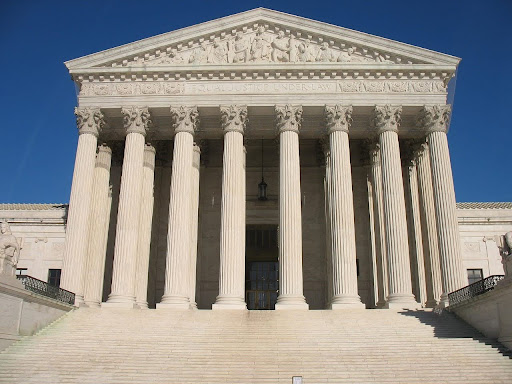
Picture credit: commons.wikimedia.org
62